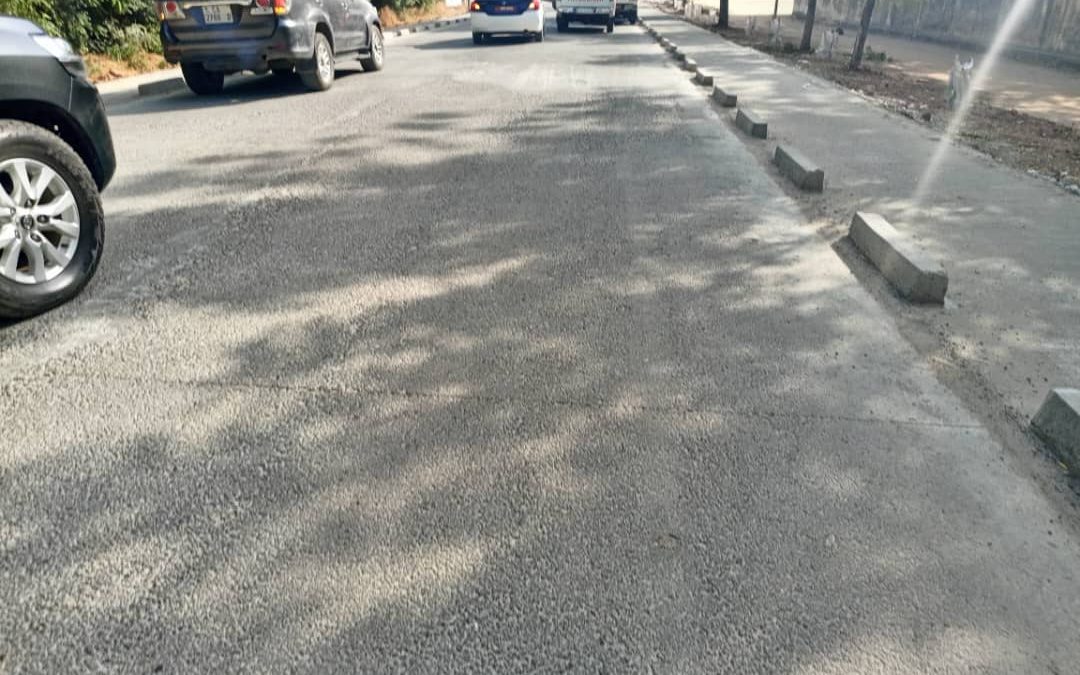
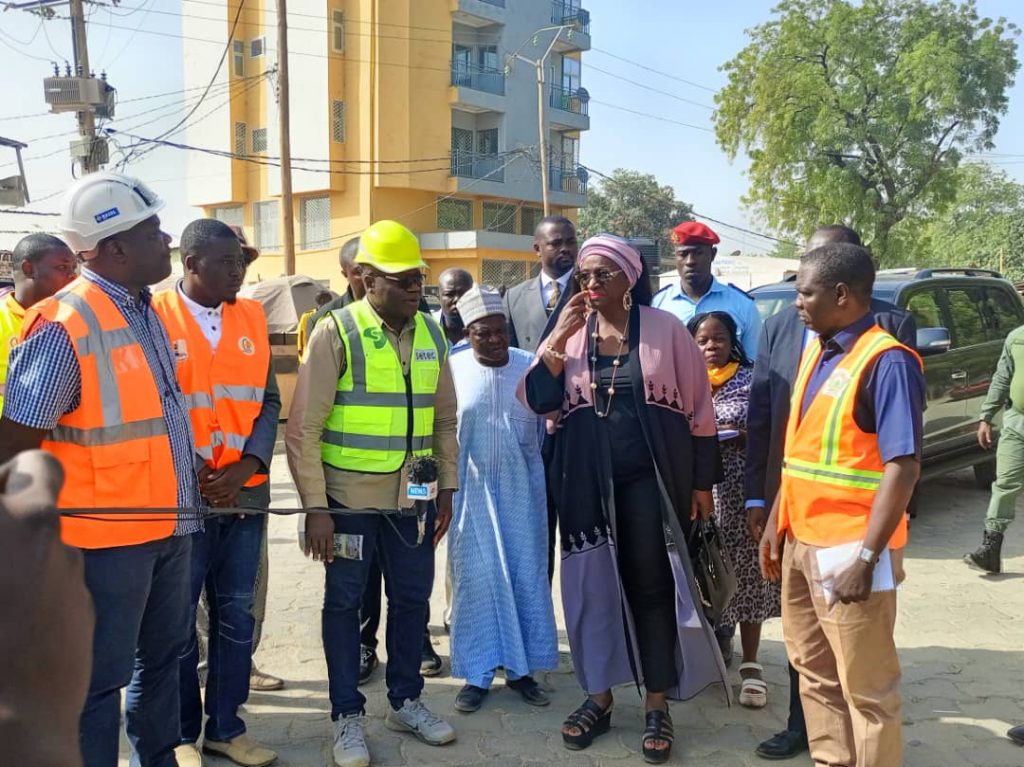
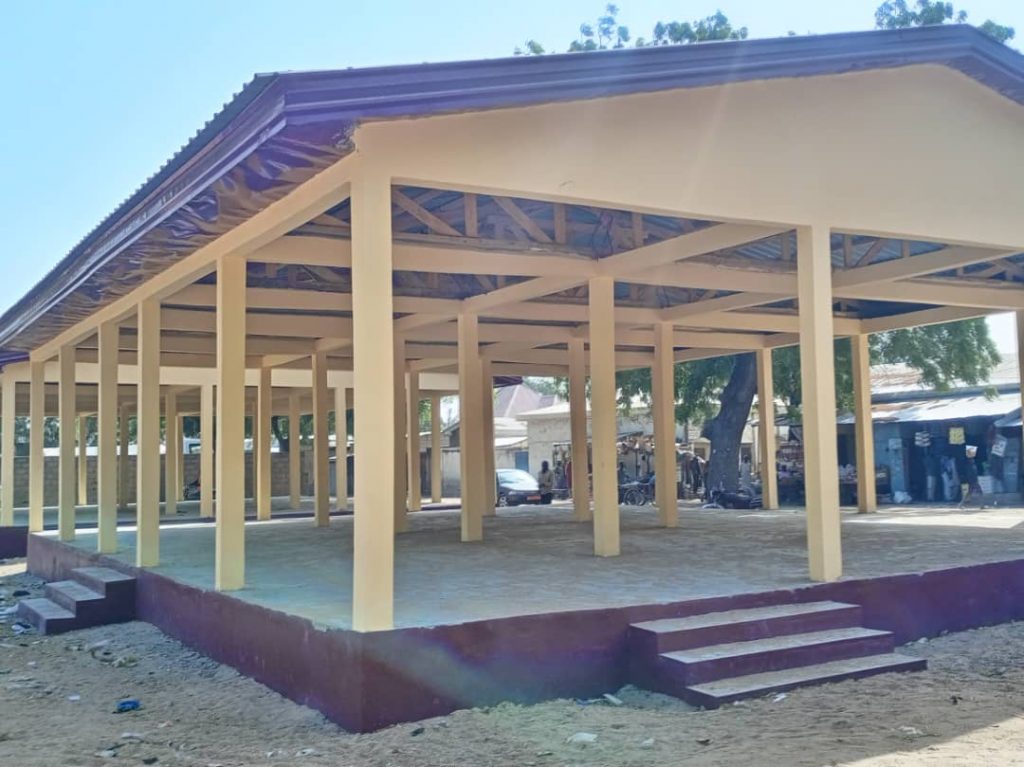
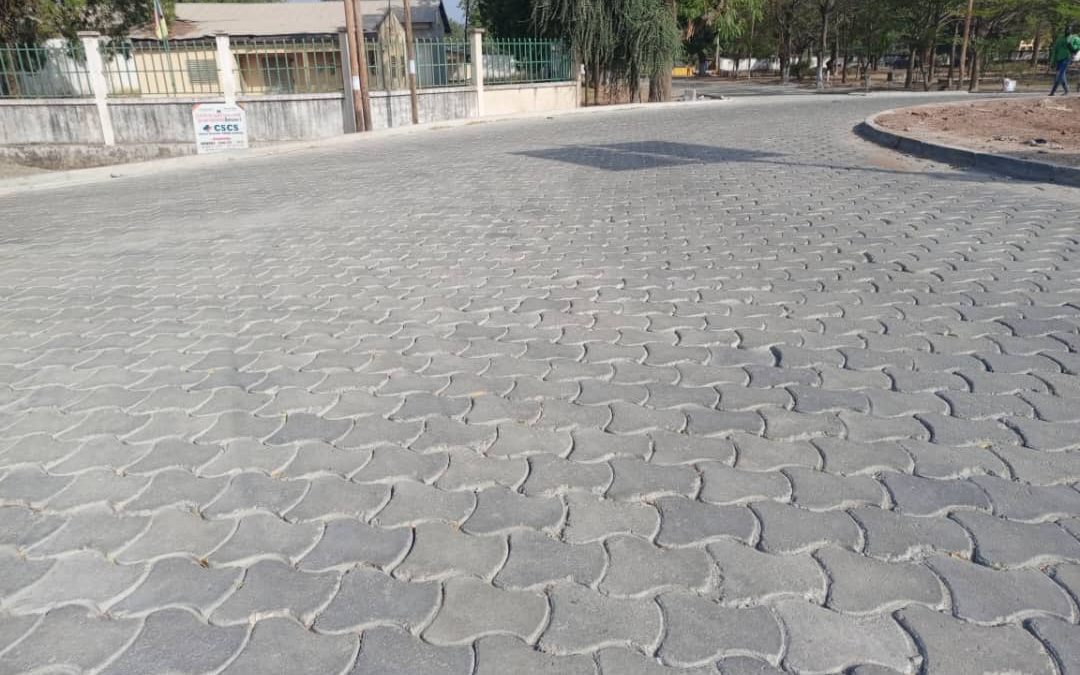
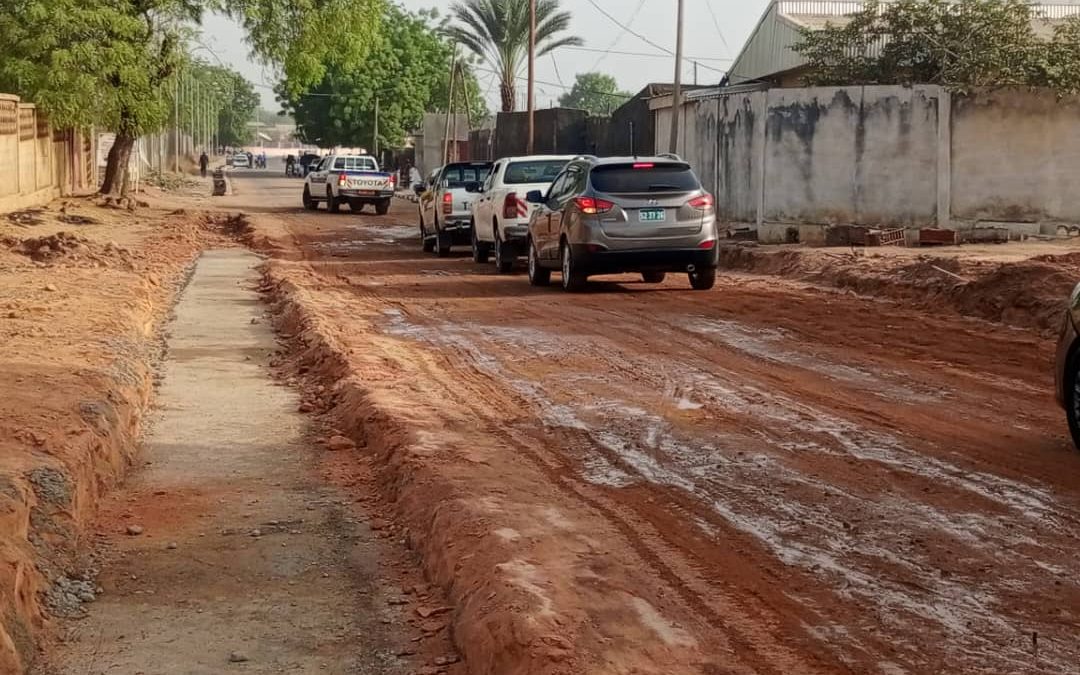
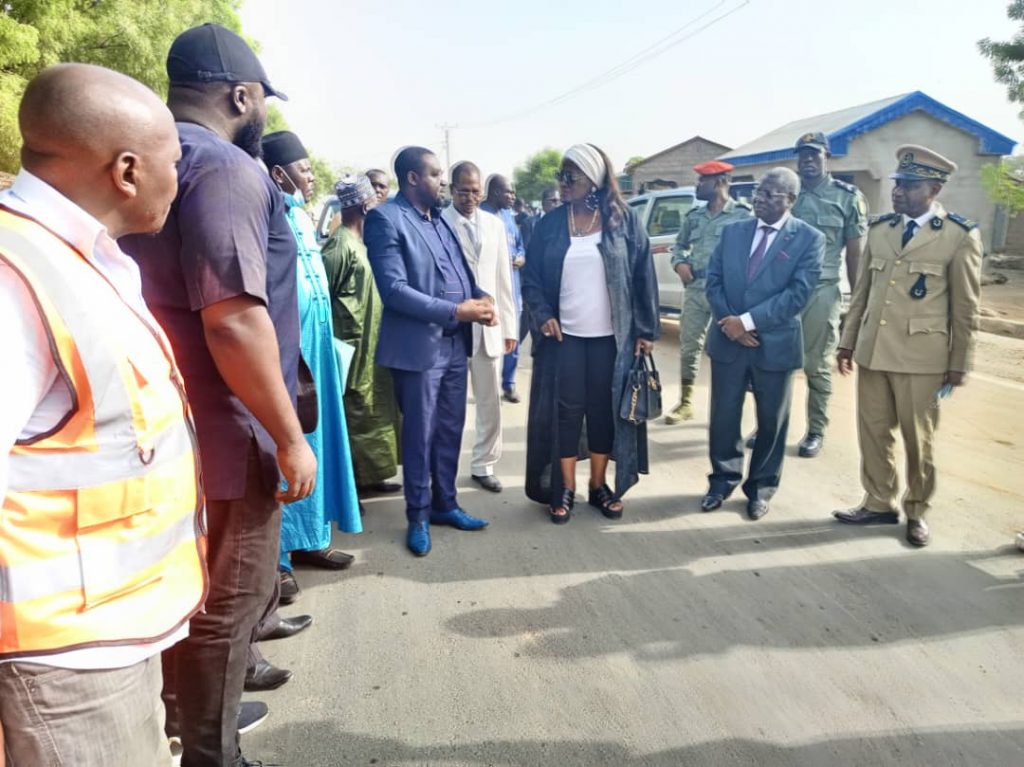
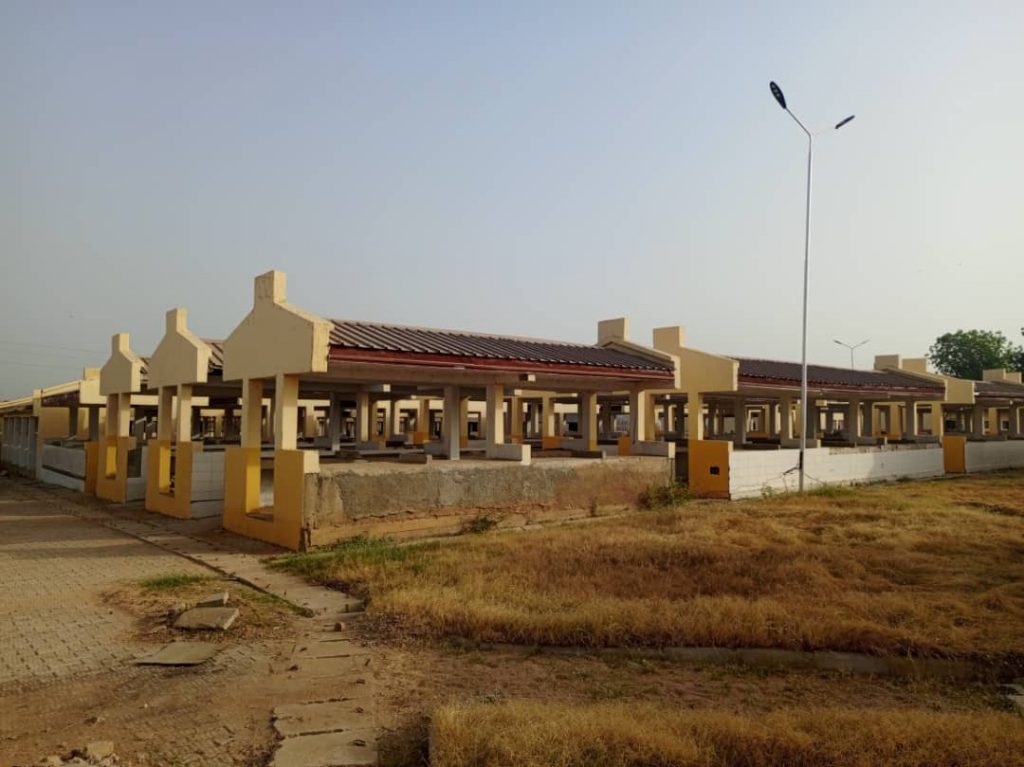
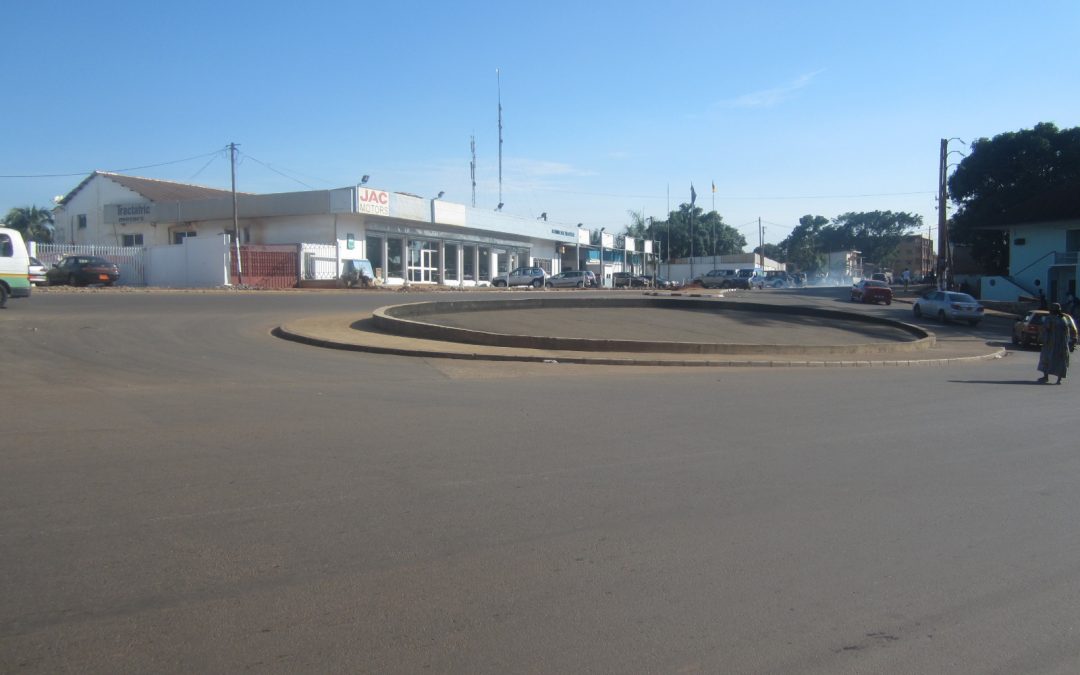
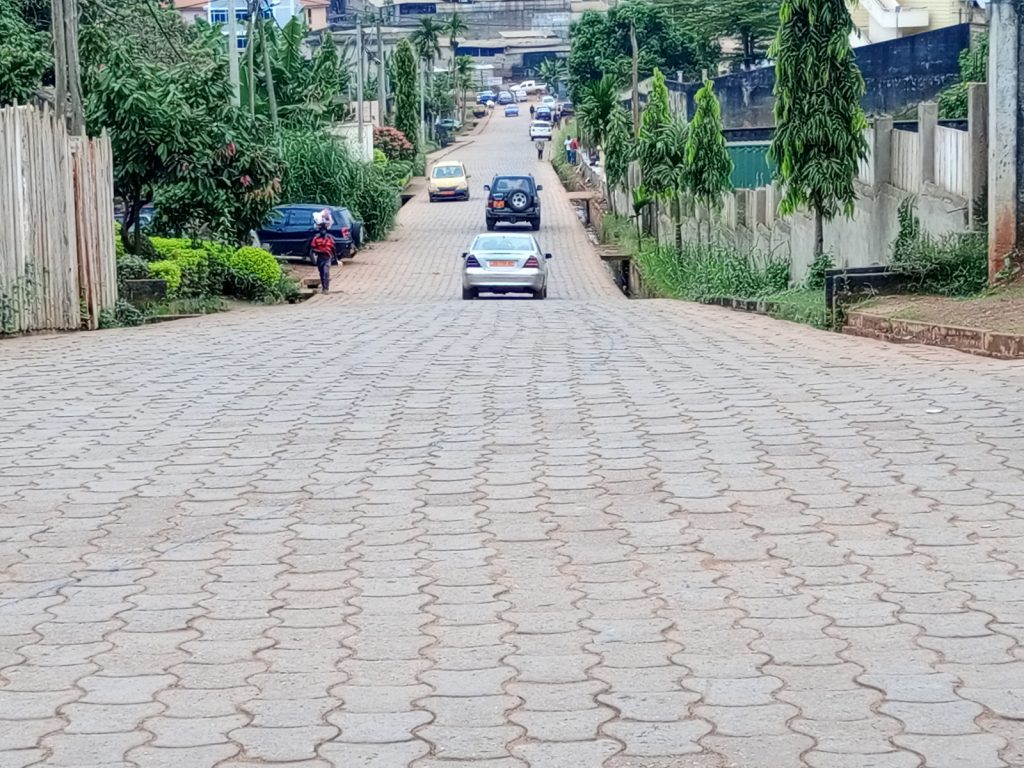
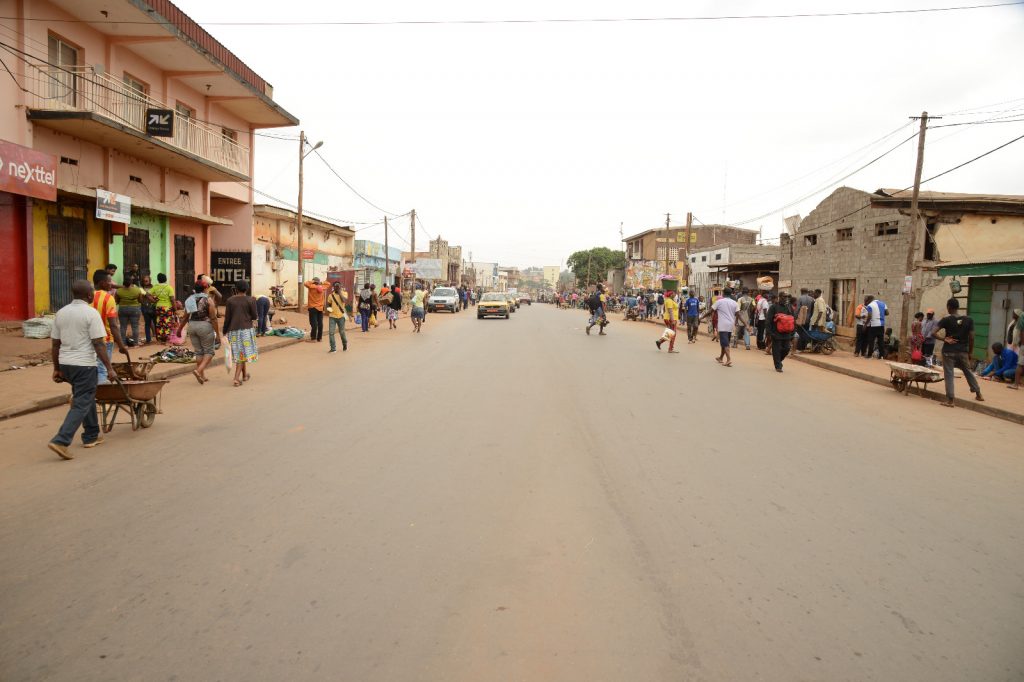
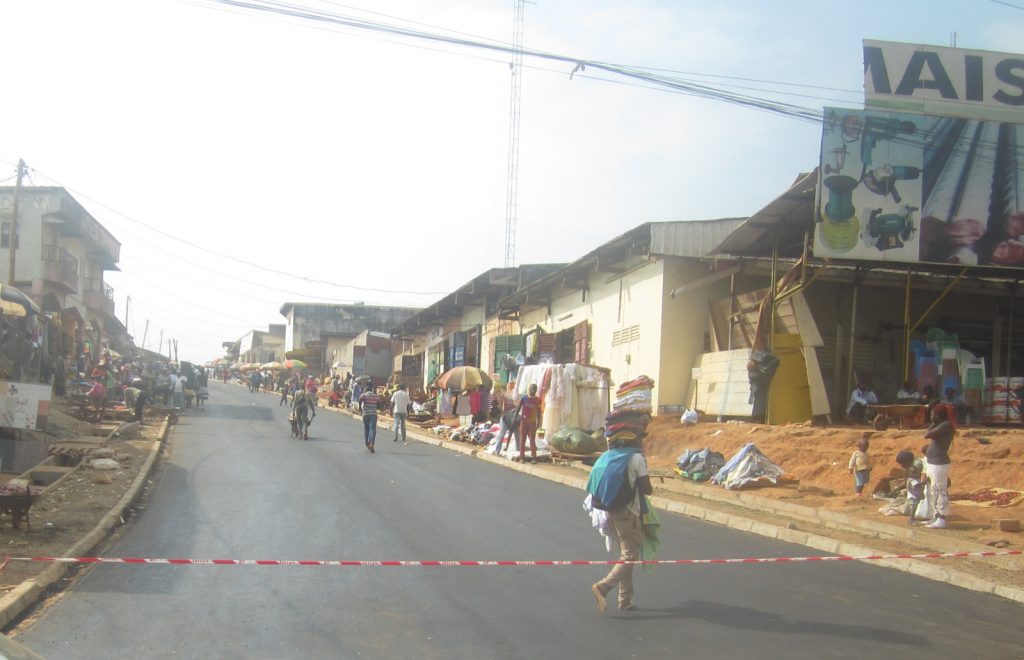
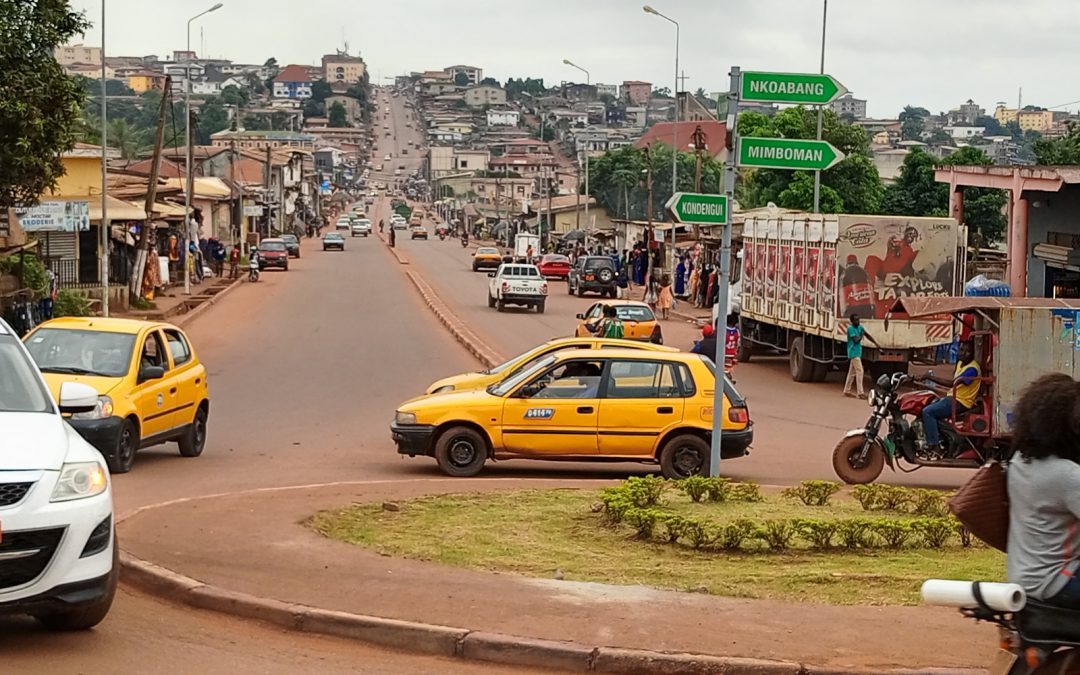
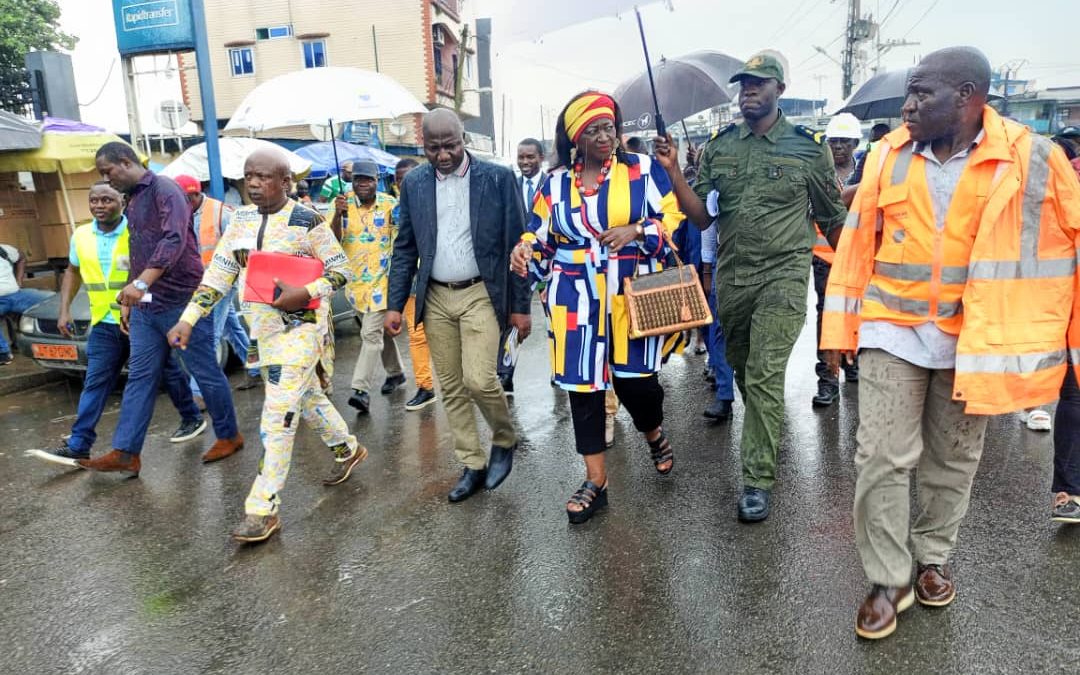
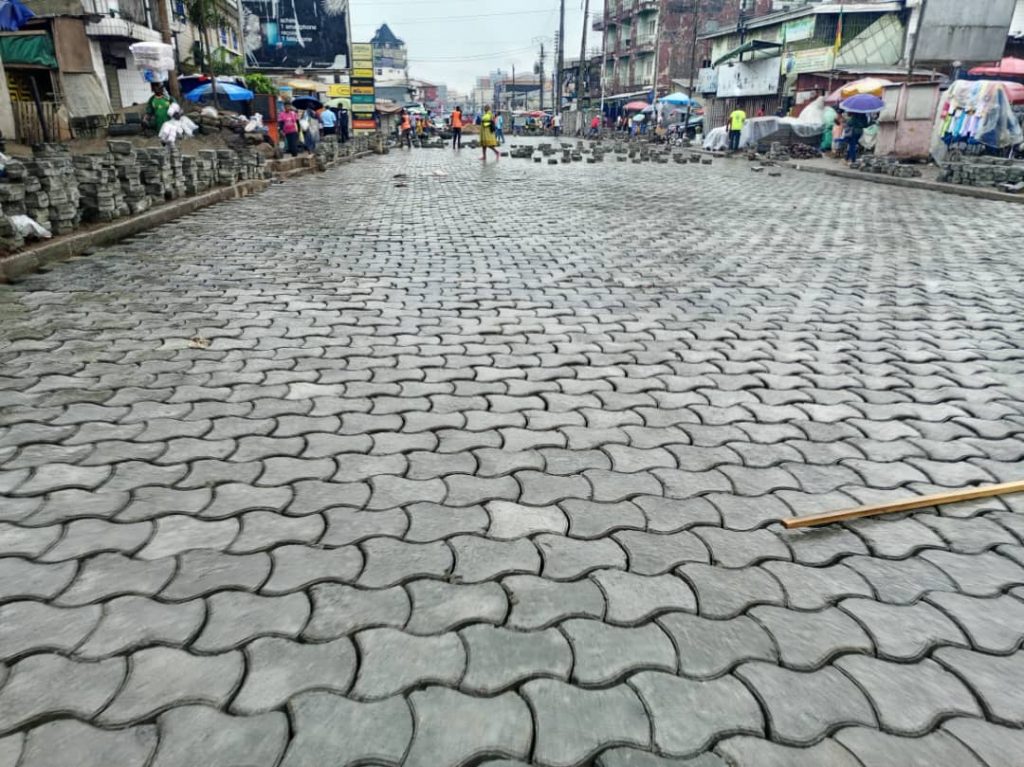
Dans la poursuite de sa visite de travail dans le chef lieu de la région de l’Extrême Nord, l’agenda du Ministre de l’Habitat et du Développement Urbain l’a conduit dans les différents chantiers exécutés dans le cadre du Programme C2D Urbain ”Capitales Régionales”. Il s’agit entre autres des travaux de voirie et des infrastructures marchandes. Des travaux dont le taux d’exécution globale est de 70% pour un taux de consommation des délais de 35%. Adjudicataire des travaux lors de l’implémentation de Capitales Régionales 1 dans les villes de Bafoussam, Bertoua et Garoua avec beaucoup de succès qui ont transformé les physionomies de ces capitales, l’entreprise Razel s’applique à dupliquer cette expérience dans la ville de Maroua. C’est ainsi que fidèle à son principe Madame le Ministre de l’Habitat et du Développement Urbain est descendu dans les différents chantiers pour s’enquérir de la qualité du travail et surtout prêter une oreille attentive à l’appréciation des populations. C’est ainsi qu’une séance de débriefing a permis de battre en brèche les différentes rumeurs qui sont véhiculées à travers certains médias et réseaux sociaux. Maître d’ouvrage dans le cadre de ce Programme, le Maire de la ville n’a pas manqué de remercier le chef de l’État pour la réalisation de ces infrastructures qui sont entrain de transformer la physionomie du chef-lieu de la région de l’Extrême Nord. En ce qui concerne l’entreprise dont la notoriété ne fait l’objet d’aucun doute, le Chef de mission de contrôle a rassuré sur la mise en œuvre des différents chantiers dans le respect des cahiers de charge.
Pour Christian Audibet , chef de mission de l’AMO du Programme C2D ”Capitales Régionales” , les rumeurs répandues à travers les réseaux sociaux n’ont rien à voir avec la qualité des travaux exécutés dans la ville de Maroua. La technologie dont il est le père, le Béton Compacté au Rouleau (BCR) a toujours rencontré des appréhensions auprès des populations régulièrement habituées au béton bitumineux. Les trois villes bénéficiaires de cette technologie à travers Capitales 1 Régionales savourent depuis 5 ans les bienfaits de cette technologie et surtout la solidité de celle-ci. Autres aspects soulevés par cet expert du BCR, c’est le coût de celui-ci qui est cinq fois moins cher que le béton bitumineux et surtout facile à entretenir par les municipalités car les matières qui entrent dans sa fabrication sont disponibles, le sable le gravier le ciment et de l’eau. Dans leur prise de parole certains intervenants au nom de la population ont marqué leur assurance malgré le doute qui les habitait. Certains, d’entre eux opérateurs économiques ont présenté leurs doléances pour l’aménagement des accès par l’entreprise. Le Président du conseil régional de l’Extrême Nord a quant à lui marqué sa satisfaction sur les transformations de la ville de Maroua et a invité les populations à se constituer en acteurs de la mue de Maroua et surtout savoir transformer les obstacles en opportunités. Présent lors des échanges, l’Ambassadeur, Chef de Délégation de l’Union Européenne au Cameroun et en Guinée Équatoriale, jean Marc, Châtaigner a évoqué les opportunités qui existent dans cette région et surtout invité à la synergie des efforts pour le développement de l’Extrême Nord.
Le Ministre de l’Habitat et du Développement Urbain a dans sa conclusion invité les populations à s’unir autour de la vision du Chef de l’État qui a décidé de la transformation des villes à travers des actes. Invitation à été envoyé aux populations de rester concentré sur les objectifs de développement et éviter les distractions. Le MINHDU a invité le Maire de ville à rassembler tous les secteurs de la population pour des échanges et surtout une meilleure compréhension des réalisations dans la ville de Maroua gage d’une meilleure appropriation de ces infrastructures. À ce sujet, le MINHDU a condamné avec fermeté les actes l’incivisme qu’elle a pu observer lors de sa descente sur le terrain et invité les autorités municipales à prendre toutes les dispositions pour sanctionner tous les acteurs du désordre urbain. Enfin le Ministre a rassuré la population quant à son engagement à veiller sur la qualité des travaux réalisés dans la ville de Maroua car aucun marché ne sera réceptionné si le cahier de charge n’est pas respecté. La journée de travail du MINHDU s’est achevée par une autre descente sur le terrain en compagnie de l’Ambassadeur, Chef de Délégation de l’Union Européenne, sur les sites des arbres plantés dans la ville de Maroua en mars 2023 lors du lancement du Projet ”Maroua ville verte ” . Descente qui a également permis au Ministre et l’Ambassadeur de jauger les effets de l’érosion sur les berges du Mayo Tsanaga, l’occasion était aussi idoine pour Monsieur l’Ambassadeur d’apprécier les travaux de voirie réalisés à travers la technologie du BCR.
Lors de son adresse à la nation le 31 décembre 2023, le Chef de l’Etat, Son Excellence Monsieur Paul Biya, l’annonçait: « la réfection des voiries se poursuit dans les villes de Maroua et Ngaoundéré, le programme y afférent va s’étendre à d’autres capitales régionales». Le 04 mars 2023, le Ministre de l’Habitat et du Développement Urbain, Célestine Ketcha Courtès, en compagnie de l’Ambassadeur de France au Cameroun Thierry Marchand, du Chef de la Délégation de l’Union Européenne et de plusieurs Ambassadeurs de la Team Europe lançaient plusieurs travaux impulsés par le Chef de l’Etat SEM Paul Biya : 16 kilomètres de voiries dans la ville de Maroua dans le cadre du Programme C2D Urbain ‘‘Capitales Régionales’’ et MAROUA Ville verte. Ces travaux fruit de la coopération entre l’Etat du Cameroun et la France est la cheville ouvrière des travaux de voirie dans le chef-lieu de la région de l’Extrême Nord. Maroua et Bamenda bénéficient à leur tour de cet important Programme dans le cadre de Capitale Régionale 2 à la suite de Capitale Régionale 1, qui a totalement transformé la physionomie des villes de Bafoussam, Bertoua et Garoua. Au-delà de la voirie réalisée dans le cadre du C2D urbain, d’autres travaux feront l’objet de l’évaluation du MINHDU financé par le BIP pour la construction de certaines voiries et des drains, la ville de Maroua étant régulièrement objet des inondations durant la saison pluvieuse. Il s’agit des travaux de bitumage du boulevard du Lamidat de Maroua ; d’achèvement du tronçon de voirie « Carrefour services du Gouverneur-résidence présidentielle-carrefour prison centrale » et surtout des travaux de construction des drains principaux dans la ville de Maroua avec une première phase déjà achevée tandis que la phase 2 en cours de démarrage ; Avec le Programme C2D Urbain c’est plusieurs autres projets qui sont en cours. Il s’agit entre autres ; de la construction du marché de Douggoi (550 points de ventes), d’une salle polyvalente de 1000 places modulables ; de trois marchés secondaires au niveau de Pont Vert, Loumo Baba et Djarengol Kodek ; de 3 espaces de grillade au lieu-dit Ministère de Soya, Founangué et Fassao ; de trois terrains multisports à Domayo, Fassao et Founangué ; de deux crèches à Domayo et à Founangué ainsi que l’aménagement de deux jardins au niveau de Sous le Bois (face Résidence Présidentielle) et en face de la Préfecture. D’importants équipements de proximité sont également visibles depuis et se déclinent ainsi qu’il suit : 240 Points d’éclairages publics dans les quartiers Pont Vert, Hardé, Louggol, Pitoaré ; 2874 mètres linéaires d’extension du réseau d’eau potable dans les quartiers Pitoaré ; 02 Toilettes publiques dans les quartiers Hardé et Pont Vert ; 15 Blocs de Latrines scolaires dans 10 Ecoles primaires publiques de la ville de Maroua ; 885 tables bancs dans 11 Ecoles primaires publiques. Dans la même composante sociale du Programme, figure l’aménagement de la voirie par la méthode HIMO dans les quartiers Pont vert, Hardé, Louggol, Pitoare. Il est exécuté par le Bureau International du Travail (B.I.T). A ce jour, l’atelier de fabrication des pavés est installé et le recrutement des jeunes est effectif. Lesdits travaux devraient générer environ 1600 emplois directs et 6700 emplois indirects dans la ville de Maroua. Lors de son passage en mars 2023, Célestine Ketcha Courtès a procédé en compagnie du l’Ambassadeur, Chef de Délégation de l’Union Européenne, au lancement du Projet ‘’Maroua ville verte’’ financé par l’Union européenne et mise en œuvre en mode team Europe. Ville située aux frontières avec le sahel le reboisement reste une préoccupation constante de l’Etat du Cameroun. La nouvelle technologie pour les travaux routiers BCR utilisée à Maroua a été mise en place avec succès à Bafoussam, Garoua
A la faveur de l’accueil de l’Afrique du football à l’occasion de l’organisation par notre Pays de la 33ème édition de la Coupe d’Afrique des Nations (CAN), la ville de Garoua s’est métamorphosée à travers de nombreuses initiatives dont celle émanant des compétences du Ministère de l’Habitat et Développement Urbain (MINHDU).
En dehors des projets spéciaux CAN, le MINHDU à travers ses missions a marqué de son empreinte la transformation du chef-lieu de la région du Nord. Ceci à travers le Programme C2D urbain ‘’Capitales Régionales’’ à travers la première phase dénommé Capitales Régionales 1, la ville de Garoua a déjà bénéficié de près de 24 milliards de Fcfa depuis 2017 pour les travaux liés au projets « C2D Capitales Régionales », donc 23,4 milliards de Fcfa consacrés à la construction de 28 kilomètres de voiries seulement. Une composante qui constitue environ 70% des investissements du projet dans la ville de Garoua et entièrement exécuté à ce jour pour la grande fierté des multiples usagers qui jouissent de la qualité de ces infrastructures.
La présente visite du Ministre de l’Habitat et du développement Urbain vise à : vérifier le niveau d’avancement des travaux ; tenir des séances de travail avec tous les acteurs impliqués dans les projets ; Proposer des solutions aux problèmes rencontrés en vue de l’achèvement des travaux ; examiner les plannings actualisés des entreprises et leur fixer les dates limites d’achèvement des travaux. L’attention du Ministre dans la ville de Garoua porte essentiellement sur les travaux en finition du C2D ‘’Capitales Régionale’’. Il s’agit des Marché poisson/bétail ; Marché YELWA; jardin An 2000 et le Parc boisé
À côté des Projets restant du C2D le MINHDU visite également certains travaux de voiries réalisés dans le cadre du prolongement de certains financements relevant de son département ministériel. Il s’agit des travaux de réhabilitation de la voie Place des fêtes Motel PLAZZA – Carrefour 6 – Pont Ngoulou long de 11 450ml. Mais aussi les travaux d’entretien de certaines voies dans la ville de Garoua, tronçon : « Carrefour Garage Administratif MINADER-Carrefour Moussa-Carrefour Petit Paris-PNDP » (1 166 ml). Autant d’infrastructures ajoutées à celles existantes viennent indéniablement consolider la ville de Garoua comme une destination prisée dans le concert des villes modernes du Cameroun.
Le MINHDU s’est déployé sur la voirie de la ville de Yaoundé à travers les projets de la coopération, C2D et PDVIR, mais aussi grâce aux programmes spéciaux impulsés par le Chef de l’Etat (dont le PLANUT, Plan d’Urgence Triennal pour l’Accélération de la Croissance Économique), aux travaux spéciaux de la Coupe d’Afrique des Nations, aux travaux spéciaux du Chef de l’Etat, au Fonds routier et au Budget d’Investissement Public (BIP), dont, il convient de le rappeler, une partie est affectée directement aux Maires dans le cadre du transfert des compétences.
Ainsi, le PLANUT a réhabilité 26 km de voirie dans la ville de Yaoundé 29 652 602 330 FCFA TTC, dont les axes les plus visibles sont les voies Mosquée Essos – Rond-point Mimboman et bretelles, Abattoir Etoudi – Marché de bétail – Nkolmbong et bretelles, Carrefour Jean Vespa – Febe, Voie de contournement arrière de la station-service MRS Nsimeyong et Bretelles, Voies de dessertes au quartier Biyem-Assi (Rue Cocotier-Inter, voies vers Rond-Point jusqu’à l’Entrée Mosquée et Château d’eau).
En ce qui concerne la CAN, c’est environ 15 km de voiries qui ont été construites dans la Cité capitale pour un budget de près de 72 milliards notamment, les voies d’accès autour du stade d’Olembé (6,94 km, y compris 4000 m2 de parkings) ; Tsinga village-carrefour petit marché Fougerolles (4,10 km) ; Tsinga Village –Carrefour NSAN-GMI (0,918 km) ; Carrefour TSINGA Village-OLEMBE II (5,07 km); Borne fontaine Emana – lycée d’Emana – Hôpital deo Gracias » (1,96 km) ; Carrefour Mballa – Cimetière Fougerole, longueur de 3, 718km ; Carrefour Abega- Carrefour Onambele (1,10 km).
L’Autoroute Yaoundé – Nsimalen, section rase Campagne a été achevée mis en service le 05 janvier 2022. Des travaux additionnels de sécurisation ont été menés tels que l’implantation des équipements et postes de vidéo surveillance, opérationnels depuis le 08 juin 2023.
En février 2021, le Chef de l’Etat a prescrit l’exécution des travaux d’urgence dans les villes de Douala et Yaoundé. À cet effet, plus de 10 Km de voiries parmi lesquels la voie Lycée Bilingue d’Essos-Carrefour Hôtel du Plateau-Mimboman Liberté, ont été entretenus dans la ville de Yaoundé pour un budget de 2 milliards de FCFA.
Plusieurs Communes de la ville de Yaoundé ont reçu des crédits transférés pour l’entretien des voiries de leurs circonscriptions respectives. Au cours de la période 2019 – 2023, 3,5 milliards de FCFA ont été alloués à ces Communes par le MINHDU pour l’entretien routier. Le Projet de Développement des Villes Inclusives et Résilientes (PDVIR) dans le cadre de l’amélioration de la connectivité et du cadre de vie des populations, se déploie dans les Communes d’arrondissement de Yaoundé V et VII (Nkolmensseng et Nkolbisson) avec la réhabilitation de 14,92 km de voirie, pour un montant de 13,18 milliards TTC, une quinzaine de milliards en intégrant les indemnisations.
La transformation de la physionomie des villes camerounaises, selon la vision du Chef de l’Etat, reste et demeure le souci permanent du Ministère de l’Habitat et du Développement Urbain. La ville de Yaoundé, Cité Capitale, est au cœur de cette attention. Au cours des cinq dernières années, des efforts importants ont été consentis pour la construction, la réhabilitation et l’entretien des infrastructures de voiries et d’assainissement de la ville par le MINHDU, à travers des ressources internes et celles issues des bailleurs de fonds internationaux. Nous présentons dans ce Mémo un panorama des réalisations menées à cet effet.
Il convient également de souligner que, dans le cadre de la mise en œuvre de la décentralisation, le MINHDU confie aux CTD l’exécution des travaux routiers et d’assainissement en leur délégant chaque année des crédits.
La dynamique impulsée dans la ville de Yaoundé par les pouvoirs publics a attiré de nombreux bailleurs pour le financement de plusieurs programmes et projets à grand impact sur la mobilité urbaine. Certains comme le PDVIR sont en cours ; d’autres sont parvenus à maturité et démarrerons en 2024.
Par conséquent, sur la base des réalisations récentes, des opérations en cours, et celles projetées dès 2024, il y a lieu de rassurer l’ensemble des acteurs et les populations sur la transformation de la physionomie de cette ville sur des bases durables.
En effet, ce 09 novembre 2023, deuxième jour de la visite de travail du Ministre de l’Habitat et du Développement Urbain dans la région du Littoral a été consacré à la visite des travaux réalisés par son département ministériel dans le cadre du Budget d’Investissement Public (BIP) et des crédits transférés aux Collectivités Territoriales Décentralisées (CTD). Concernant la voirie, l’attention du MINHDU était particulièrement portée sur l’accompagnement des communes dans le traitement des nids de poule dans certaines Communes d’arrondissement de la ville de Douala. Madame le Ministre s’est rendue entre autres à la Rue du Rois Njoya où 1775 mètres linéaires de nids de poules ont été traités, au carrefour Agip où les travaux de voirie sont également réalisés avec la pose des pavés. En ce qui concerne les crédits transférés c’est dans la liesse que les populations de la Commune d’arrondissement de Douala V avec à leur tête le Maire Richard Nfeungwang de Ladite Commune, ont reçu Madame le Ministre. Ici sont lancés les travaux de voirie qui viendront désenclaver le quartier Makèpè Missokè 1.
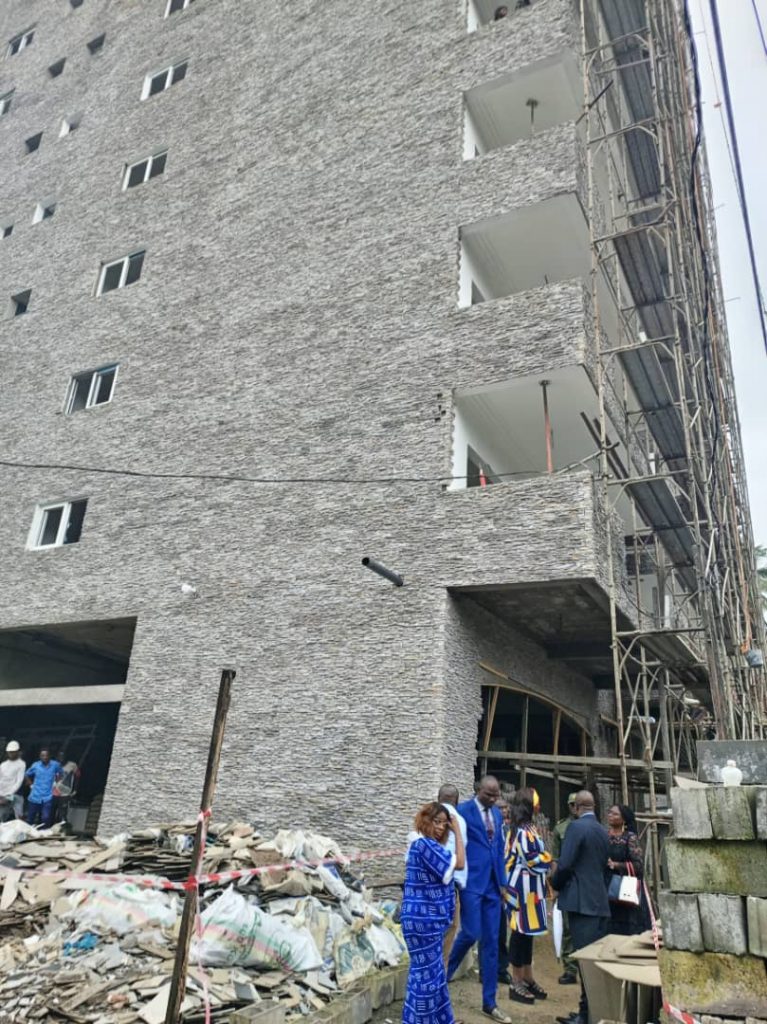
En dehors de cette voirie, un pont sera construit pour rallier définitivement les deux parties de ce quartier. Pour la circonstance, les populations ont dans l’allégresse, demandé au MINHDU de transmettre leurs remerciements au Président de la République car leur quartier ne se fera plus appeler Makèpè inondation . Avant l’inspection des travaux de voirie, Madame le Ministre est allée s’enquérir de la construction de plusieurs immeubles sans respect des normes de construction ( absence de permis de bâtir), occasion une fois de plus pour elle d’attirer l’attention des Magistrats municipaux sur la veille qui doit être faite autour de ces genres d’initiative. La visite de travail du MINHDU dans la région du Littoral s’est achevée par l’inspection de la voirie de la ville d’Edea dont les travaux de réhabilitation tardent à démarrer véritablement.
Ce fut une autre occasion pour elle d’interpeller les entreprises adjudicataires des travaux. Toutefois, les populations peuvent déjà savourer les deux ponts qui rallient le quartier administratif aux quartiers d’amour et quartier de Bord .